Aftershave Balm vs Splash: What’s the Difference?
Shavory earns a commission on purchases made through links in this article at no extra cost to you.
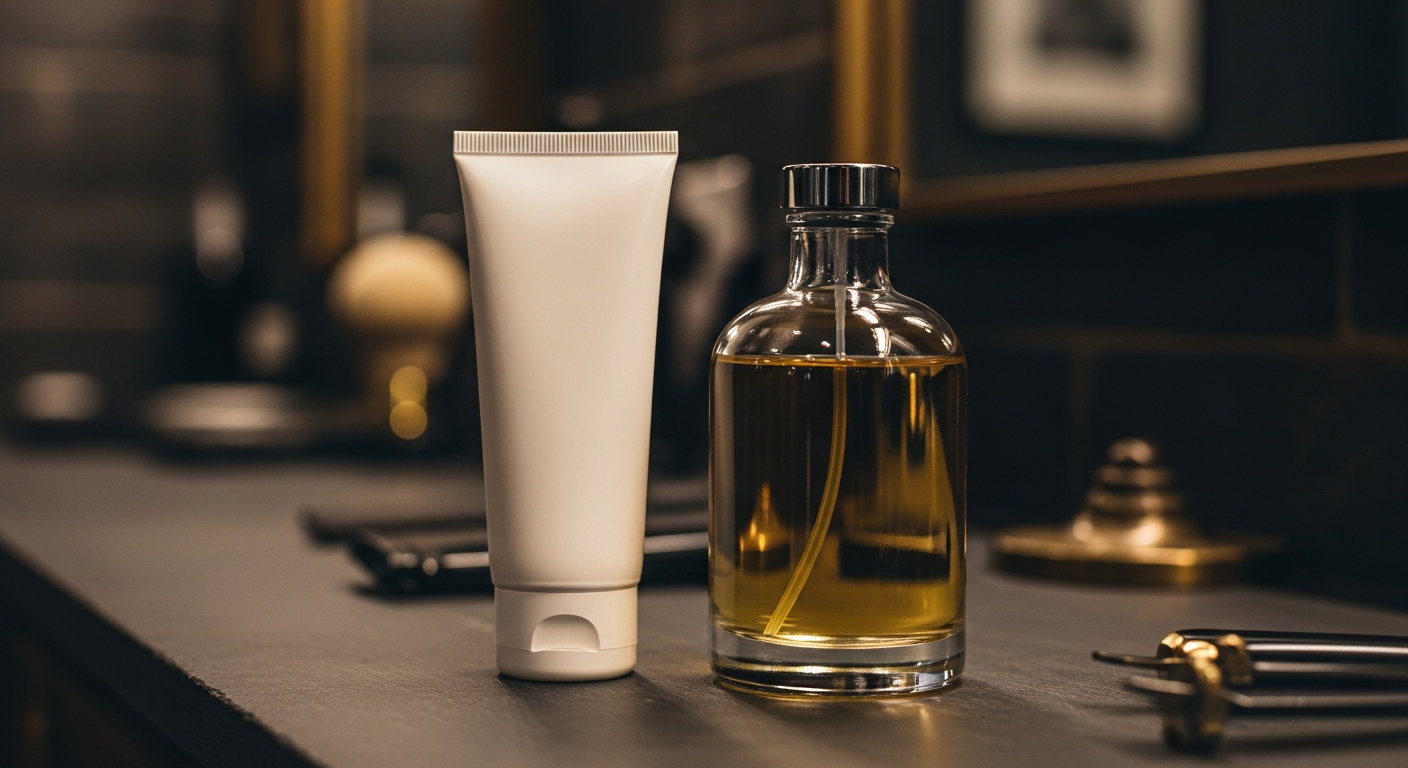
An aftershave balm is a moisturizing, alcohol-free product that hydrates and soothes skin after shaving. An aftershave splash is alcohol-based, bracing on contact, antiseptic, and built around scent projection. Both finish the shave, but they do very different jobs.
Which one you reach for depends on your skin type, the season, and what you actually want from your post-shave routine. This breakdown covers every meaningful difference so you can make a confident pick. Prices and product formulations reflect market availability as of mid-2026.
This guide covers traditional liquid splashes and cream/gel balms used after a wet shave. It does not cover aftershave oils, beard balms, or electric-shave post-care products, which have different formulation logic. Skin-type recommendations are drawn from community consensus on Sharpologist, Badger & Blade forums, and r/wetshaving threads; product data from manufacturer specifications and verified retail pricing.
Shavory earns a commission on qualifying purchases through the Amazon links on this page, at no extra cost to you. Picks are chosen on performance and value, not on commission.
Quick Comparison: Balm vs. Splash
| Feature | Aftershave Balm | Aftershave Splash |
|---|---|---|
| Alcohol content | None (alcohol-free) | 40% to 60%+ ABV |
| Skin feel | Calming, coating, no sting | Bracing sting for 30-60 seconds |
| Hydration | Replenishes moisture actively | Neutral to negative on hydration |
| Antiseptic on nicks | No | Yes, at 40%+ ABV |
| Scent projection | Quieter, skin-close, longer-lasting | Strong opening burst, fades in 30-90 min |
| Best skin type | Dry, sensitive, reactive | Oily, combination, normal |
| Drugstore entry point | Nivea Sensitive Post Shave Balm (~$8-12) | Pinaud Clubman (~$7-8) |
| Artisan tier | Specialty balms: $18-30 | Barrister and Mann splashes: $20-35 |
| Product | Format | Alcohol | Best for |
|---|---|---|---|
| Nivea Sensitive Post Shave Balm | Balm | None | Dry and reactive skin, winter, daily use |
| Clubman | Splash | Yes | Oily skin, classic barbershop scent |
| Thayers Witch Hazel | Toner | Alcohol-free | Skin that stings with everything else |
Ingredients and Alcohol Content
The fundamental split is alcohol versus no alcohol. Splashes run anywhere from roughly 40% to over 60% alcohol by volume. That’s intentional: the alcohol tightens pores, acts as an antiseptic on small nicks, and carries the fragrance.
Balms skip alcohol entirely and replace it with emollients, glycerin, panthenol (vitamin B5), allantoin, and sometimes light silicones. Nivea Sensitive Post Shave Balm uses chamomile extract and vitamin E alongside panthenol. The formula is almost lotion-like compared to a splash.
Thayers witch hazel toner occupies a middle ground, containing a small amount of alcohol (under 12%) but far gentler than a traditional splash. It delivers mild astringency without the full sting of a high-ABV formula, which is why it shows up repeatedly in beginner kit recommendations on r/wetshaving for shavers with sensitive skin who still want some toning effect. The core chemistry: higher alcohol content means more astringency, more antiseptic activity, and a sharper initial sensation. Knowing where your chosen product sits on that scale tells you exactly what to expect when you apply it. Witch hazel products give shavers a useful on-ramp if they want some tightening effect without committing to the full-alcohol sting. For shavers with reactive skin who find even witch hazel too drying, the answer is a balm-only routine, not a lighter splash.
Skin Feel on Application
Splashes sting. That’s not a complaint from the community, it’s a feature they celebrate. The brief burn from the alcohol is described across Badger & Blade threads as a “shave high,” a tactile signal that the shave actually happened. It dissipates within 60 seconds on healthy skin.
Balms do the opposite: they coat, calm, and condition. You rub a small amount between your palms, press it into your face, and your skin absorbs it within a minute or two. No sting, no redness, no tightening sensation. The difference is immediately obvious the first time you switch between them.
If you have dry or sensitive skin and you’ve been reaching for a splash, the sting you’re feeling is more than ritual. It’s your compromised skin barrier reacting to the solvent. That’s the consistent position across r/wetshaving and Sharpologist’s published wet-shaving guides: sensitive skin belongs in a balm, not a lighter splash. The astringency that feels invigorating on oily skin reads as prolonged irritation on skin already dealing with dryness or reactivity. Your skin type determines whether the sting is a feature or a warning sign. The difference shows up most clearly in the hour after the shave: oily-skin shavers report the tightening sensation passes within minutes and leaves skin feeling clean, while dry-skin shavers report persistent redness lasting 20 to 40 minutes. If that pattern matches your experience, the fix is a balm, not a different splash.
Hydration and Skin Health
Balms win here. The emollient base actively replenishes moisture stripped during the shave. Regular balm users on Badger & Blade report noticeably softer skin over weeks of consistent use, particularly in winter when forced-air heating dehydrates the skin before you even pick up a razor.
Splashes do not hydrate. Some modern Barrister and Mann splashes include witch hazel and small amounts of glycerin to soften the aftereffect, but the base is still alcohol and the net effect on skin hydration is neutral to negative compared to a balm.
If you shave daily, a balm or a splash-then-balm sequence is the long-term skin-health play. The cumulative difference between daily balm use and daily splash-only use shows up over months, not days. Shavers who track this on Badger & Blade’s skincare threads consistently note that the transition to balm is most noticeable in the first week of winter use, when environmental dryness amplifies the alcohol’s dehydrating effect. Daily splash use without moisture replenishment leads to tighter, flakier skin at the cheeks and jawline over time, even on shavers with normal skin type.
Antiseptic Properties and Nick Healing
Splashes earn real points here. The alcohol concentration is high enough to disinfect minor razor cuts quickly, which matters if you’re learning technique or using an open-comb razor. Pinaud Clubman, the most-recommended entry-point splash in wet-shaving communities, has been used as a post-shave antiseptic for decades because the formula works at that ABV level.
Balms don’t sterilize. If you nick yourself with a balm-only routine, you’re relying on your skin’s natural healing and the clean environment of a good shave. Most experienced shavers use an alum block as their first post-shave step to handle nicks, then follow with either a splash or balm. Alum is mildly antiseptic on its own and stops minor bleeding fast.
The practical implication: beginners still dialing in their technique benefit more from a splash’s antiseptic action because early-stage shaving produces more nicks. Once technique tightens up, the antiseptic advantage of a splash becomes less relevant, and the choice shifts to what your skin needs for recovery. Experienced shavers who’ve gone nick-free for months often switch to balm-only without noticing any healing difference.
Scent: Role and Longevity
Fragrance behaves differently in alcohol versus an emollient base. In a splash, alcohol acts as a carrier that creates an immediate burst of projection. The scent fades within 30 to 90 minutes because the volatile compounds evaporate with the alcohol.
In a balm, fragrance is typically lighter and stays closer to the skin. Longevity can actually be longer if the skin is well-hydrated, since moisturized skin holds fragrance compounds better than dry skin.
For scent enthusiasts, splashes from Barrister and Mann (the Seville and Leviathan formulas are referenced constantly in community threads) are valued for that opening-act projection. Seville in particular is cited repeatedly on r/wetshaving as one of the most recognizable aftershave signatures in the hobby, with a soapy-citrus profile that divides opinion but builds a devoted following. If scent is your primary reason for using an aftershave product at all, a splash delivers a more immediate aromatic payoff than any comparably priced balm. The trade-off is that you’re wearing it for roughly the first hour of your day, then it’s gone. A well-moisturized skin base can extend that slightly because hydrated skin binds fragrance compounds longer than dry skin, which is one practical reason the splash-then-balm layering method appeals to scent-focused shavers who want the projection of a splash with better longevity.
Menthol and Cooling
Many splashes include menthol, and the alcohol amplifies the cooling sensation significantly. Menthol splash users on r/wetshaving describe it as an addictive finish in summer months, a sharp cold that hits right after the sting fades. Some balms also contain menthol, but the effect is milder because there is no alcohol to accelerate the evaporative cooling.
If you shave in summer heat or simply enjoy the cold-shock finish, a menthol splash is the more intense experience. A menthol balm is a gentler version that still delivers cooling without the alcohol sting. The intensity difference is significant enough that shavers often keep both: the menthol splash for hot-weather shaves, the menthol balm for year-round use when they want cooling without the full sting.
Menthol concentration varies widely across products. Community threads on Badger & Blade regularly benchmark specific formulas, and the consensus is that concentration in splashes typically exceeds what you’ll find in balms at the same price point. If maximum cooling is your goal, a menthol splash is the more efficient route.
Matching Product to Skin Type
The community consensus across r/wetshaving and Sharpologist’s published guides lands on these consistent patterns. These aren’t arbitrary categories; they reflect how alcohol interacts with different skin physiology.
- Dry skin: Balm only. The alcohol in a splash will strip what little moisture is there and leave your face tight and flaky by mid-morning.
- Sensitive or reactive skin: Balm only, or alum block followed by a balm. Alcohol inflames already-reactive skin.
- Oily or combination skin: Splash is a natural fit. The alcohol cuts excess oil, the astringent tightening is genuinely useful, and the skin has the moisture reserves to absorb the solvent hit.
- Normal skin: Either works. Many shavers rotate based on season: splash in summer, balm in winter, sometimes both.
The single most common mistake in post-shave routines is a dry-skin shaver using a splash because that’s what their father used or what they saw in a barbershop. The shave irritation they attribute to technique or blade choice is often the splash stripping their skin’s moisture. Switching to a balm resolves it within days.
The Splash-Then-Balm Layer
This is the technique you see recommended most often on Badger & Blade for shavers who want both experiences. Apply the splash first, let the alcohol evaporate (around 60 seconds), then apply a small amount of balm on top.
The splash handles antiseptic duty, delivers the bracing sensation and initial scent burst, and tightens pores. The balm then seals in hydration and locks in some of the lingering fragrance. Nivea Sensitive Post Shave Balm is the go-to recommendation for the balm layer because it’s light, absorbs fast, and doesn’t compete aggressively with the splash’s fragrance profile.
This method makes sense if you enjoy the ritual of a splash but your skin needs moisture support. It also costs less than buying a premium splash-balm combo set from artisan brands, since the balm layer is typically a drugstore product. The one variable to watch: applying the balm too early, before the alcohol has fully evaporated. Balm applied while the skin is still wet with splash gets diluted and absorbs less effectively. The 60-second wait matters.
Price Ranges
Splash prices run from roughly $7 to $8 for a large bottle of Pinaud Clubman to $20 to $35 for artisan splashes from brands like Barrister and Mann. Balms run $8 to $12 for drugstore options like Nivea Sensitive Post Shave Balm and $18 to $30 for specialty balms. A single bottle of either product typically lasts four to six months with daily use, given how little product is needed per shave, so the per-shave cost is low regardless of tier.
The splash-then-balm combination costs more upfront than either product alone but less per shave than buying a single premium artisan combo set, since you’re pairing a mid-range splash with a drugstore balm. Budget $15 to $20 total to run this setup and you’ll be well inside what most wet-shaving starters spend. If you want a deeper look at the top-rated products in both categories, the best aftershave guide covers the full ranked list with use-case recommendations. Neither product category requires a large upfront investment to start, which is one reason wet shaving consistently ranks as the most cost-efficient close-shave method in long-run comparisons.
Verdict by Use Case
Sensitive or dry skin: Go with a balm. Nivea Sensitive Post Shave Balm is the community’s most-cited drugstore solution, and it genuinely performs. If you’ve been using a splash and your skin feels tight or red after shaving, switch to a balm for two weeks and compare.
Oily skin or summer shaving: A splash. Pinaud Clubman is the entry point, $7 to $8 at most drugstores, and it gives you a clear read on whether the splash experience works for you before spending on artisan options.
Post-razor-burn recovery: Balm, applied after an alum block. The alcohol in a splash will aggravate inflamed skin. Focus on hydration and barrier repair until the skin settles, then reintroduce a splash if you want one.
Scent lovers: Splash. The projection you get from an alcohol-based formula is difficult to replicate in a balm. Barrister and Mann splashes are the artisan standard for scent complexity. For everyday use without spending $25, Pinaud Clubman has a divisive but iconic scent that the wet-shaving community has debated passionately for decades.
Beginners: Start with a balm to protect your skin while technique is still developing. Nicks are more common early on, so having an alum block plus a balm is the safest default setup. Once your skin is used to the shave and your technique improves, try a splash and see whether you enjoy the sensation.
For a full guide to preventing post-shave skin issues, check the razor burn guide, which covers technique adjustments alongside product choices.
Both splash and balm are valid. The aftershave category hub has the full product overview if you want to explore specific options beyond what’s covered here.
Check price on Amazonsplash
Check price on Amazonwitch hazel
Frequently Asked Questions
Can you use both an aftershave splash and a balm together?
Yes. Apply the splash first, wait about 60 seconds for the alcohol to evaporate, then apply a small amount of balm. The splash handles antiseptic and toning; the balm seals in hydration. Nivea Sensitive Post Shave Balm is the most commonly recommended balm for this sequence because it’s lightweight and absorbs without residue.
Is aftershave balm better for sensitive skin than splash?
The wet-shaving community’s consistent position is yes. Alcohol-based splashes irritate compromised or reactive skin, strip moisture, and prolong redness after shaving. Alcohol-free balms soothe and repair rather than challenge the skin barrier. If your face burns or tightens after a splash, switch to a balm and the difference is usually immediate.
Does aftershave splash actually disinfect razor cuts?
At the alcohol concentrations found in traditional splashes (40% to 60% ABV), yes. The alcohol kills surface bacteria on minor nicks and abrasions. This is one of the practical reasons splashes remain popular despite their more aggressive skin feel. An alum block paired with any aftershave adds hemostatic and mild antiseptic benefit if you cut yourself frequently.
How long does aftershave splash scent last compared to balm?
Splash fragrance typically lasts 30 to 90 minutes, fading as the alcohol evaporates. Balm fragrance is quieter but lingers slightly longer on well-hydrated skin because moisturized skin holds fragrance compounds better. Artisan splashes from Barrister and Mann have stronger initial projection than most balms, which is why scent-focused shavers prefer them for the opening impression even when longevity is comparable.