How to Clean a Shaving Brush and Make It Last Years
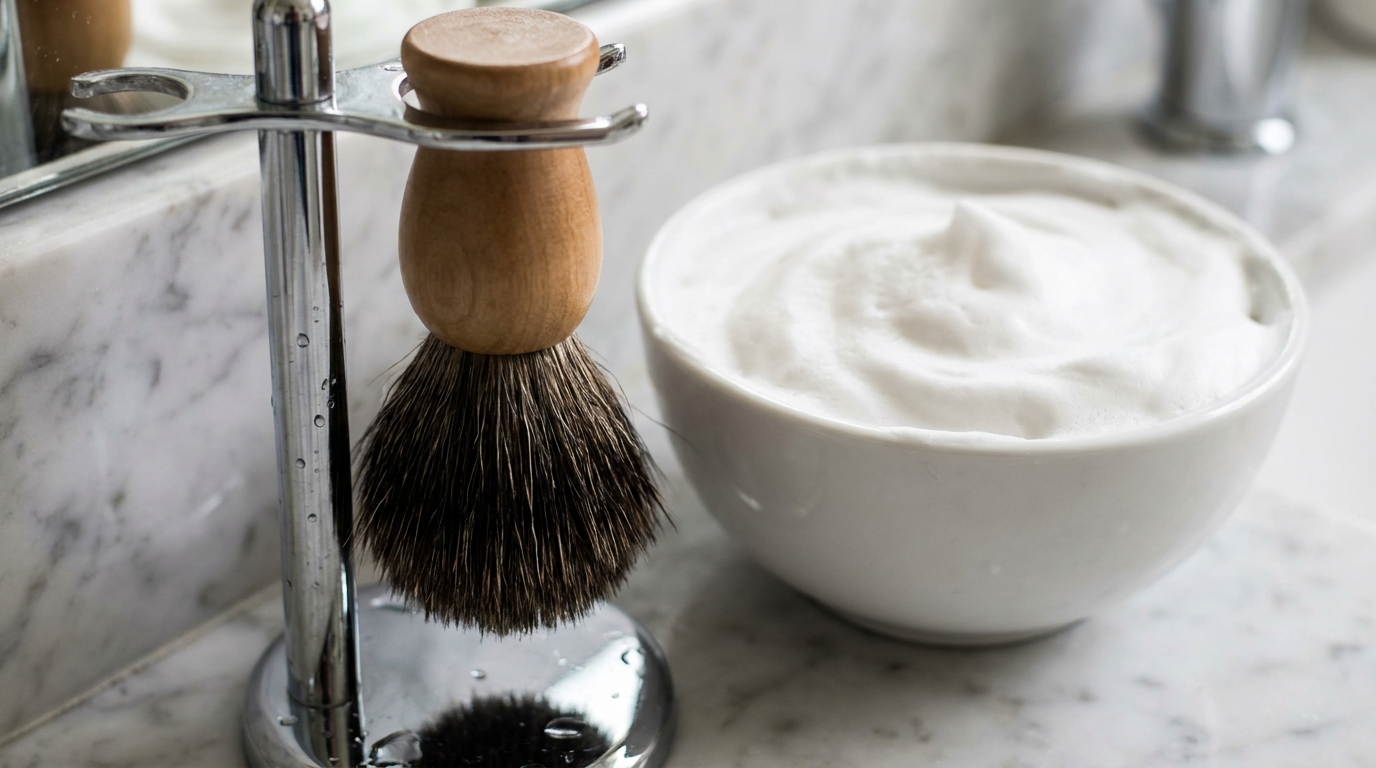
Rinse the brush in warm water after every shave, squeeze it out gently from base to tip, and hang it somewhere with airflow. That routine alone gets you most of the way to a decade of service.
Deep cleaning is a monthly job, not a daily one. Most brushes that die early are killed by heat, twisting, and trapped moisture rather than by dirt.
The after-shave routine that matters most
Rinse under warm running water until the water runs clear. Hot water is the real enemy here, because it softens the glue holding the knot and strips natural oils out of badger and boar hair.
Squeeze the knot from base to tip with your fingers. Do not wring or twist it. Twisting bends hairs against the glue plug, and that is what produces shedding a few months later.
Shake it out, then hang it bristles down or stand it upright somewhere with moving air. Moisture sitting at the base of the knot rots handles and loosens glue.
The monthly deep clean
Soap scum and hard-water minerals build up inside the knot even with careful rinsing. You notice it as a brush that feels stiff at the core and stops holding lather the way it used to.
Lather the brush with a plain unscented bar soap or a drop of gentle shampoo, work it against your palm, and rinse it fully. Repeat until no more grey water comes out of the base.
If your water is hard, follow with a soak in one part white vinegar to four parts warm water for no longer than five minutes, then rinse thoroughly. Longer soaks start working on the glue.
What changes by knot type
Badger and boar are animal hair, so they respond to occasional conditioning and dislike heat. Synthetic knots tolerate more abuse and dry far faster, which is why they travel well. The differences run deeper than cleaning, and synthetic vs badger brush lays them out.
A new boar needs different handling entirely. Breaking one in involves repeated soaking and use before it softens, so follow the steps for how to break in a boar shaving brush before you judge how it performs.
Mistakes that kill brushes early
- Standing a soaking wet brush in a closed cabinet
- Rinsing with water hot enough to sting your hands
- Twisting the knot dry inside a towel
- Sealing a damp brush into a travel tube
- Scrubbing hard against the bottom of a lather mug
That last one deserves attention. Heavy pressure into a hard surface splays the knot permanently and no amount of cleaning brings the tips back. Building lather is a light-pressure job, and how to build the perfect lather shows the motion.
When to retire a brush
Losing a few hairs a month is normal on a natural knot, especially in the first weeks. Losing clumps is not.
A mildew smell that survives a vinegar rinse, or a glue plug that crumbles when you press it, means the knot is finished. Handles usually outlive knots by years, and reknotting is cheap, so keep the handle you like.