Magic Shaving Cream: The Depilatory Alternative Explained
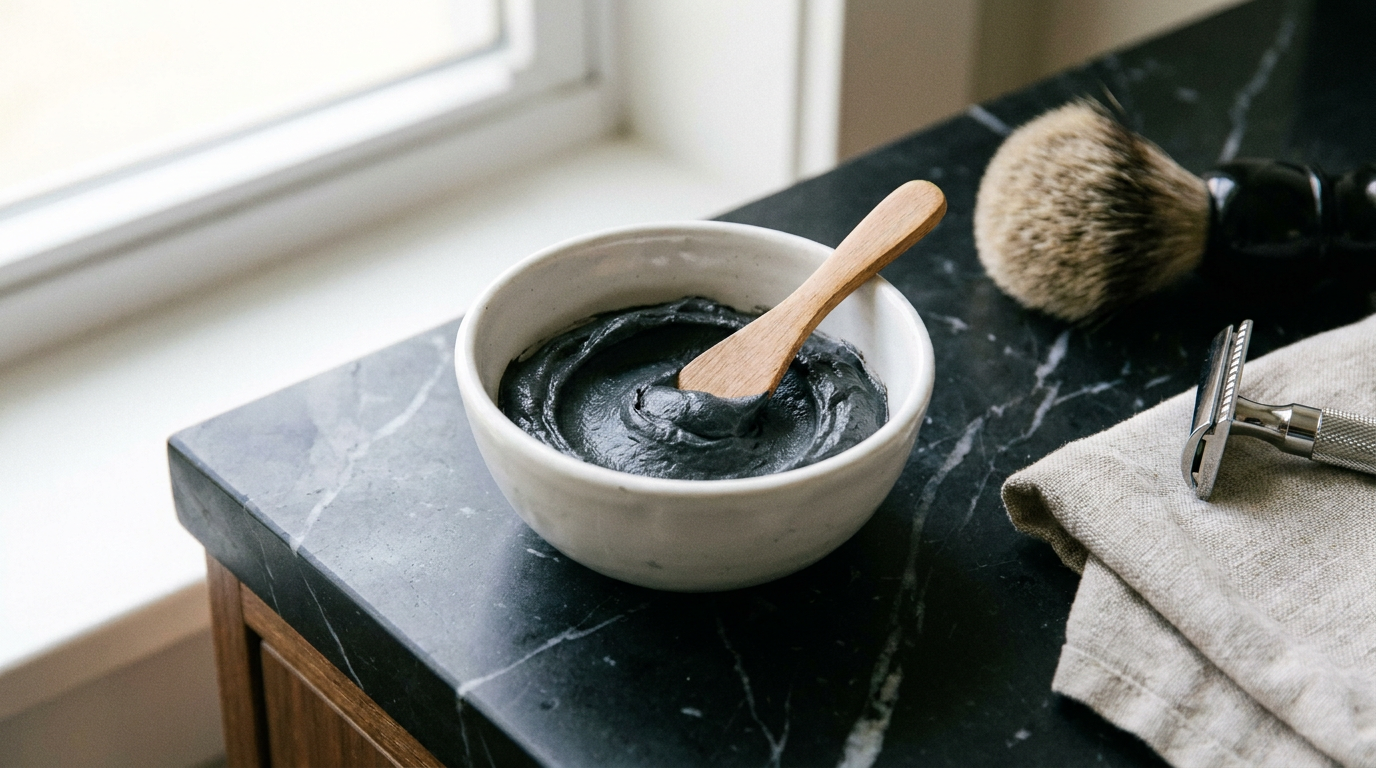
Magic shaving cream is not a shaving cream at all. It is a depilatory, sold most famously as Magic Shave powder by SoftSheen-Carson, and it dissolves hair at the skin with calcium thioglycolate instead of cutting it with a blade. Nothing about the process involves a razor, which is exactly why people fighting chronic razor bumps keep landing on this page.
What magic shaving cream actually is
The flagship product is a powder. You mix roughly half a teaspoon with an equal amount of water into a paste, spread it over dry skin, wait about five minutes, then scrape the dissolved hair away with the edge of a spatula and rinse. The maker’s directions are blunt: do not leave it on for more than five minutes. A cream version exists in the same line, but the powder is the one with decades of barbershop history behind it.
Chemically this sits in the same thioglycolate family as leg depilatories, reformulated for coarse, curly facial hair. That hair type is where the razorless route earns its keep, because hair cut short by a blade curls back into the skin and becomes pseudofolliculitis barbae. If blades keep giving you razor burn no matter how much your technique improves, removing the blade from the equation entirely is a reasonable experiment.
How to use it without burning your face
Video: Kirby Rose
- Patch test behind your ear 24 hours ahead. Facial skin reacts harder than legs.
- Mix equal parts powder and water into a paste about the texture of yogurt.
- Apply against the grain with the spatula, covering hair completely.
- Set a timer. Five minutes is the ceiling, not a suggestion.
- Scrape off with the spatula edge, rinse with cool water, and skip alcohol-based aftershave that day.
Miss the timer and the failure mode arrives fast. The chemical keeps working on skin after the hair is gone, and the result is irritation that looks and feels like a burn. Anyone who tells you seven or eight minutes works even better has simply not been burned yet.
Where it beats a razor, and where it does not
Regrowth comes back a day or two later than a blade shave, because the hair is dissolved slightly below the skin line rather than sliced at it. Smoothness without mechanical irritation is the whole payoff. The trade cuts both ways: a wet shaver who enjoys the ritual gives up nine minutes of steel and lather for a chemical waiting game that smells closer to perm solution than shaving soap. If that ritual is part of why you shave, our piece on whether wet shaving is worth it makes the counterargument.
Heavy gray beards are one more honest limitation. Thioglycolate acts unevenly on coarser gray shafts, so the first pass often leaves strays that need a second application 24 hours later, and patchy results are common enough that barbers keep a blade backup on hand.