Omega Boar Brush Review: The Budget Classic
Affiliate disclosure: this post contains affiliate links. If you buy through them, we earn a small commission at no extra cost to you.
The Omega 10048 Is the Default “First Brush” for a Reason
The Omega 10048, also sold as the Omega Pro 48, is the brush that r/wetshaving, Badger & Blade, and Sharpologist have collectively pointed beginners toward for over a decade. Not because it is the most comfortable brush on day one. Because for around $12 to $15 (mid-2025 street prices), it does everything a lather-obsessed shaver needs, and once it breaks in, it outperforms synthetics at three times the price.
The community verdict is consistent across those forums: buy the Omega 10048, use it for two to four weeks, then decide if you want to spend more. Most people stop there.
How We Evaluated This Brush
This review synthesizes community consensus from r/wetshaving, Badger & Blade, and Sharpologist. The break-in timeline, backbone assessment, and lather performance observations reflect aggregated user reports across multiple threads and review posts on those platforms, cross-referenced against manufacturer specifications (24mm knot, beechwood handle) from the Omega product page. Price ranges reflect mid-2025 retail averages from vendors including West Coast Shaving, Italian Barber, and Amazon US.
Where community opinion splits, both positions are represented. Claims that appear in fewer than three independent sources are noted as minority views. This review covers the standard Omega 10048 only; it does not evaluate the Omega 46, Omega 49, or international pricing variants.
Build and Handle
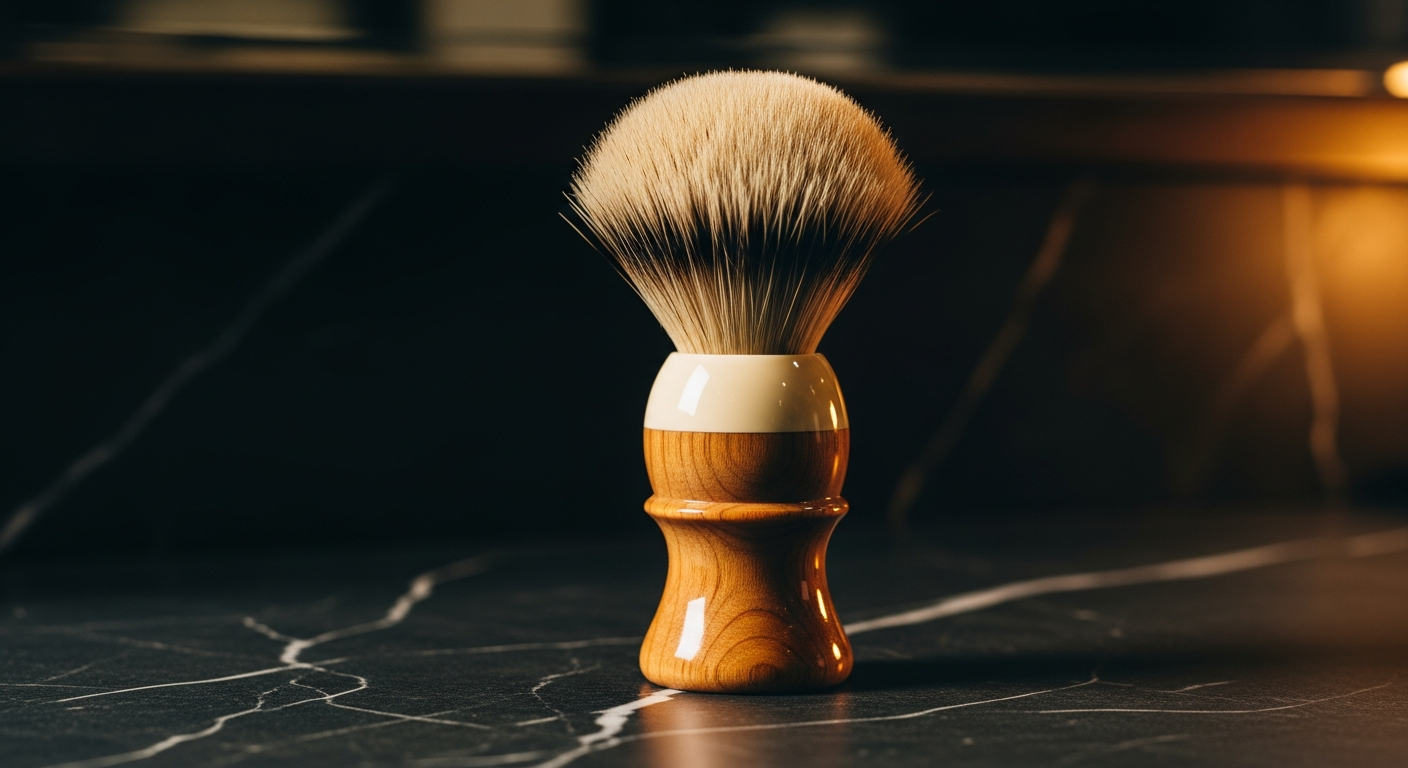
The handle is turned beechwood, sealed and finished in a simple honey tone. It sits well in the hand, neither too narrow nor too fat, and the weight is close to nothing.
That is not a complaint. Heavy handles are a niche preference; most shavers adapt to lighter handles within a session or two.
Construction is solid for the price point. The knot (the bristle bundle set into the handle) is glued in securely. You will not notice any wobble or movement, and the finish does not chip or cloud after repeated exposure to water and soap.
The Knot: Backbone Is the Whole Story
The boar knot sits around 24mm in diameter. More relevant than the diameter is the backbone: Omega 10048 boar bristles are stiff, dense, and assertive.
Backbone refers to the resistance the bristles push back against your face. A brush with high backbone exfoliates, scrubs, and drives lather into coarser beards with real authority. The Omega 10048 has more backbone than any synthetic at twice its price.
Badger & Blade members frequently name the backbone as the feature that converts skeptics. If you shave with a puck soap or a hard soap in a mug, the stiff tips dig in and load efficiently. Soft creams and croaps (cream-soap hybrids with a soft, paste-like consistency) are also handled well, though they require slightly less effort.
The loft (the exposed length of bristles above the handle) is medium. Face latherers will find it comfortable. Bowl latherers will appreciate the backbone when working a hard soap.
Break-In: Be Prepared, It Is Real
Fresh out of the package, the Omega Pro 48 has a distinct animal smell and the tips feel scratchy. This is normal boar behavior. As mantic59 (Mark Leedom), the founder of Sharpologist, documented in a June 2026 article: “Only boar brushes undergo meaningful physical change during break in, as their fiber tips can split with repeated wetting and drying.” That physical splitting of the hollow-core fibers is what produces the softer feel long-term users describe. It takes time and cannot be rushed significantly.
Most users on r/wetshaving report the brush hitting its sweet spot somewhere between 10 and 25 shaves. A few reach it faster, some take longer. The process is not complicated: use it every shave, soak for 30 to 60 seconds before loading, let it air-dry fan-out after each session. If you want to accelerate the process, read this guide on how to break in a boar brush for the exact soaking and bloom method the community recommends.
Early bristle shedding is also common in the first week. A few bristles in the sink after your shave is not a defect. It stops within the first month of regular use.
Lather Performance
Once broken in, the Omega 10048 produces dense, hydrated lather that competes with brushes costing two or three times as much. The backbone is the key variable with hard puck soaps: the stiff bristles dig into the soap surface, load the knot efficiently, and then release lather evenly across your face through the full pass. Bowl latherers running a hard soap will notice the difference immediately compared to a soft synthetic.
The knot does not retain water as well as high-grade badger, but at this price that is a genuine non-issue. Add slightly more water at the start and the brush performs without hesitation. With soft creams and croaps you will want to dial back loading pressure; the backbone that helps with hard soaps can churn a soft cream too aggressively if you push hard for 30 seconds.
Face latherers specifically benefit from the medium loft and stiff tips. The bristles hold enough water to keep the lather building through the full first pass and into the second, which is more than many entry-level synthetics manage.
Who It Is For
- You are new to wet shaving and want to learn proper technique without spending $40 to $80. The Omega 10048 teaches you loading, face versus bowl lathering, and water ratios on a brush cheap enough to replace and good enough to keep.
- You shave with artisan hard soaps. The backbone is a real advantage here; many synthetics struggle with dense, low-water formulations.
- You have used a boar brush before and know what to expect. This is a proven, consistent performer batch to batch.
- You want to spend as little as possible to enter the hobby correctly. At $12 to $15, there is no cheaper entry point with this level of community validation.
Who Should Skip It
- You dislike any break-in period. The first few sessions are noticeably scratchy and the smell is real. A quality synthetic at $20 to $30 performs from shave one with no odor and no shedding.
- You want instant softness. A mid-range badger brush at $40 to $60 delivers pillow-soft tips immediately. Read the comparison on synthetic vs badger brush if you are weighing those options.
- You have sensitive or thin skin. Firm boar bristles can irritate; a soft synthetic or fine-grade badger is the better fit.
How the Omega 10048 Compares to the Main Alternatives
These are the three brushes the wet shaving community consistently recommends at the entry level. Prices reflect mid-2025 street averages from major US retailers. Community sentiment ratings are editorial summaries based on aggregated forum consensus.
| Brush | Price (approx.) | Knot Type | Break-In | Backbone | Best For |
|---|---|---|---|---|---|
| Omega 10048 | $12 to $15 | Boar, 24mm | 10 to 25 shaves | High | Hard soaps, learning technique, value seekers |
| Yaqi 24mm Synthetic | $15 to $20 | Synthetic, 24mm | None | Medium | Immediate use, soft-cream shavers, travel |
| Semogue 1800 | $14 to $18 | Boar, 21.5mm | 8 to 20 shaves | High | Hard soaps, slightly smaller knot preference |
The community splits on Omega 10048 versus Semogue 1800; most agree both are excellent for the money, with the Omega 10048 being slightly easier to find across US retailers. The Yaqi 24mm synthetic is the right pick if patience is not in your budget or if you travel frequently and want a zero-smell option.
For a broader look at what is available at every price point, the best shave brush guide covers the full range from budget boar to high-end silvertip.
The Recommendation
The Omega 10048 earns its reputation cleanly. At $12 to $15, it is the most community-validated entry point in wet shaving. The 24mm boar knot delivers high backbone that outperforms any synthetic in its price bracket once the bristle tips split and soften, which happens reliably between shave 10 and shave 25 with proper daily use. The beechwood handle is light and well-balanced. The lather it produces on hard puck soaps is competitive with brushes at $35 to $50. The trade-offs are real: the break-in period is uncomfortable for the first one to two weeks, early shedding is normal, and the animal smell is present until the brush seasons. None of those issues are defects. They are the nature of natural boar bristle at any price.
Buy it. Use it daily for three weeks. Then you will know exactly what kind of brush you want next, and you will make that decision with real shave experience rather than forum speculation.
For more options to compare against, see the full shave brushes hub.
Frequently Asked Questions
How long does the Omega 10048 take to break in?
Most users on Badger & Blade and r/wetshaving report the brush reaching its best feel between 10 and 25 shaves. Soaking for 30 to 60 seconds before each use and allowing the brush to air-dry fan-out speeds the process. The bristle tips split and soften with regular use; there is no shortcut that replaces actual shave sessions.
Is the Omega Pro 48 the same as the Omega 10048?
Yes. Omega Pro 48 and Omega 10048 refer to the same brush. The “Pro 48” name appears on some retail listings and packaging variations, but the knot, handle, and specifications are identical. The brush is sometimes called the “Omega boar brush” generically in forum discussions.
How does the Omega 10048 compare to a synthetic brush?
A synthetic brush needs no break-in, carries no odor, and dries faster. The Omega 10048 has more backbone once broken in, which performs better with hard puck soaps, and many shavers prefer the feel of natural bristles for face lathering. If you want immediate softness and zero waiting, choose a synthetic. If you shave with hard soaps and want more scrub and backbone, the boar wins.
Does the Omega boar brush shed bristles?
Shedding a few bristles in the first one to two weeks is normal and expected. It is not a quality defect. The shedding stops once the brush settles. If the brush continues to lose large amounts of bristles beyond the first month of regular use, that would indicate a manufacturing issue, but reports of that are rare across the major retailers that carry it.