Shaving Soap Bowls: Sizing to Your Brush and Your Puck
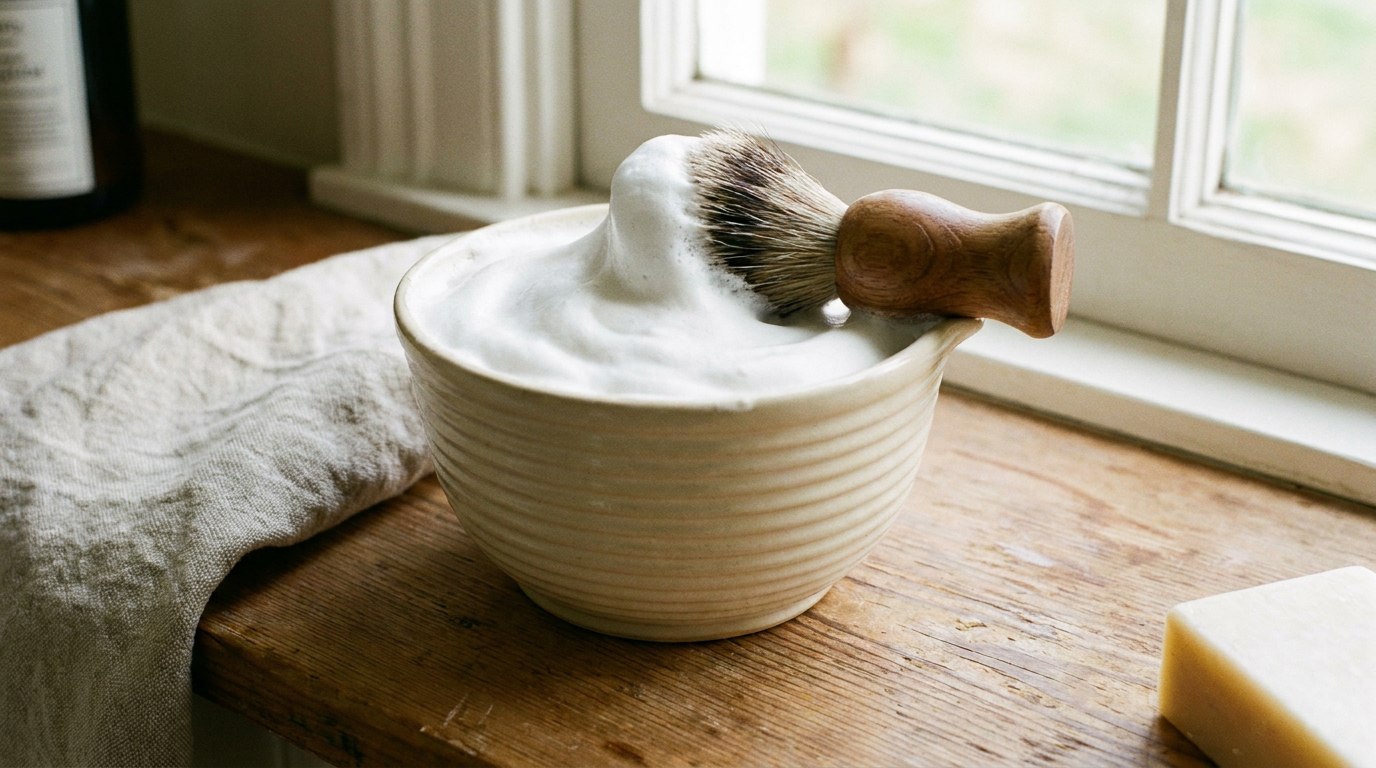
Buy the bowl by your brush knot, not by how it looks on the shelf. A knot that swims in an oversized bowl whips air instead of lather, and a bowl that pinches the knot frays the tips. An inner diameter about 10 mm wider than the knot is the working rule most brush makers quote.
Depth is the spec that changes lather
Deep, narrow bowls with ribbed or spiral interiors force the brush to work the soap in a tight column, which builds dense lather fast. Wide, shallow bowls look handsome and load big fans better, but they let lather escape over the rim when you speed up. If your lather arrives thin and frothy, depth is usually the culprit, not the soap.
We walk the mechanics in how to build lather that holds, and the bowl is step one of that chain.
Lathering bowl or storage bowl
These are different tools. A storage bowl keeps the puck dry between shaves; a lathering bowl takes the beating and the water. Storing a hard puck in the bowl you whip lather in leaves it sitting in residue, and triple-milled pucks, compared with soft croaps in pucks versus croaps, can glaze over and load poorly once they stay damp.
Matching diameter to knot size
Knot sizing has drifted upward, and plenty of bowls have not followed. Check brush knot sizes explained before ordering: a 28 mm fan needs close to 100 mm of working width at the rim, while a 22 mm knot is happy near 85 mm. Vintage bowls, a common thrift find, tend to run too narrow for modern knots.
Where the advice fails
Face latherers do not need a lathering bowl at all. A puck, a hand, and a damp brush do the job, and the bowl becomes an expensive decoration on the counter. Buy it for how you lather, not for the photo.