Synthetic vs Badger Brush: Which Should You Choose?
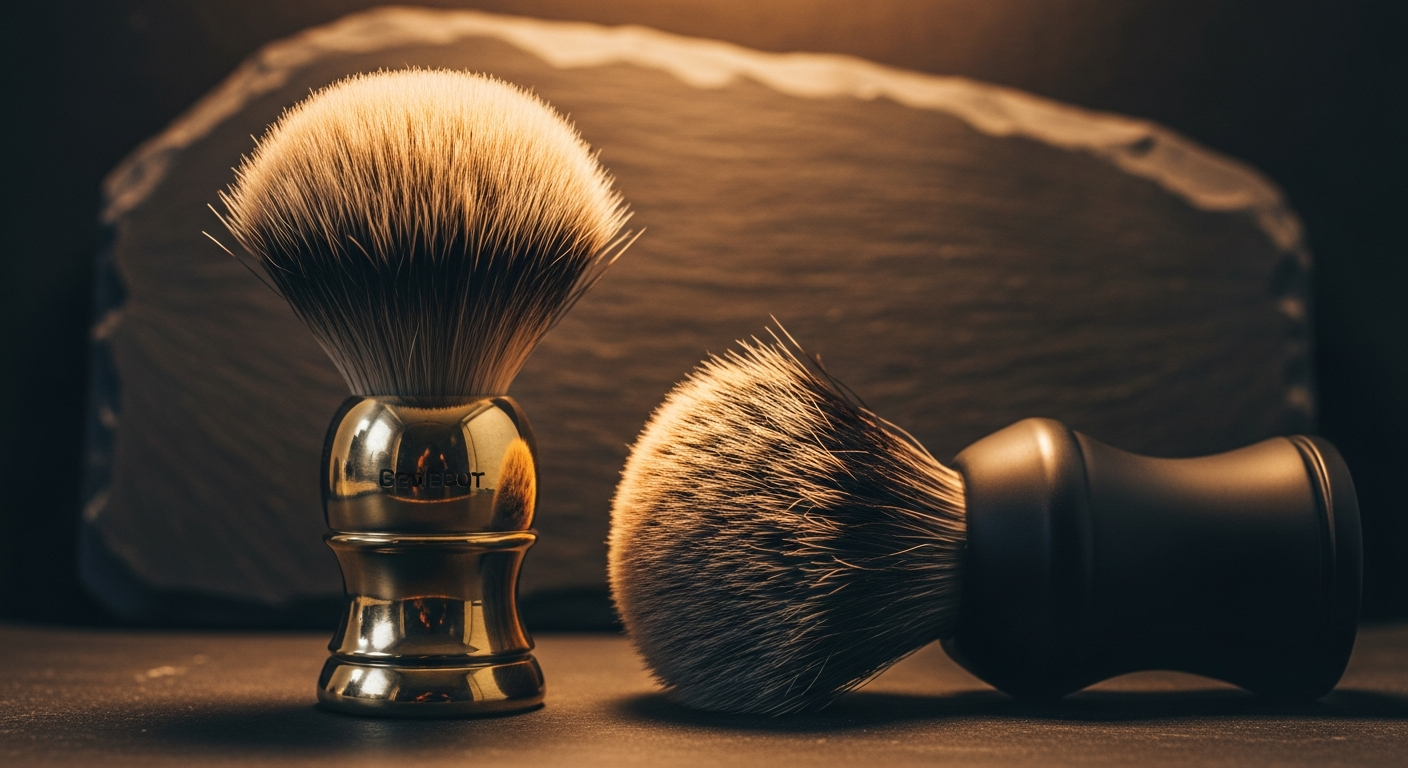
Synthetic brushes win for beginners, travelers, and anyone who wants zero maintenance or has ethical concerns about animal hair. Badger brushes, particularly silvertip grade, are the choice for shavers who prioritize a luxurious face feel and are willing to pay for it. Most people in the wet-shaving community end up owning both.
This comparison covers every dimension the r/wetshaving and Badger & Blade communities consistently debate: lather performance, feel, backbone, drying time, ethics, break-in, price, longevity, and that infamous wet smell. Read all of our picks on the shave brushes hub if you want specific product recommendations after you decide which hair type fits your kit.
Shavory earns a commission on qualifying purchases through the Amazon links on this page, at no extra cost to you. Picks are chosen on performance and value, not on commission.
Quick Comparison: Synthetic vs Badger at a Glance
The table below summarizes how each hair type performs across the nine dimensions this guide covers. Use it as a fast reference if you already know the basics and just need the verdict.
| Dimension | Synthetic | Badger | Verdict |
|---|---|---|---|
| Lather generation | Fast water release, easy to control | Absorbs and reserves water, better for hard pucks | Tie for most shavers |
| Face feel | Very good at premium tier (G5C, Tuxedo) | Best at silvertip grade | Silvertip badger still leads |
| Backbone | Predictable, varies by knot design | Higher in two-band/Manchurian; floppy in silvertip | Synthetic more consistent |
| Drying time | 30 to 60 minutes | 4 to 8 hours | Synthetic wins |
| Ethics | Vegan, no animal sourcing | Animal hair, sourcing concerns documented | Synthetic wins |
| Break-in | None | 3 to 5 shaves | Synthetic wins |
| Entry price | From $15 (Yaqi) | From $30 (Maggard two-band) | Synthetic wins |
| Longevity | 5 to 7 years reported | 10 to 20 years with care | Badger wins |
| Wet smell | None | Noticeable for first 10 to 15 shaves | Synthetic wins |
| Brush | Knot | Wins on | Trade-off |
|---|---|---|---|
| Goodfellas’ Smile The Deep | Synthetic 24mm | Drying speed, consistency, vegan, travel | Less heat retention than badger |
| Mühle Classic Silvertip | Silvertip badger | Soft tips, heat retention, water capacity | Slow to dry, animal product, pricier |
Water Retention and Lather Generation
Badger hair absorbs and holds water inside each strand. That reservoir effect helps you build dense, hydrated lather on the face without adding extra water mid-bowl. Silvertip badger, the softest grade, holds the most water; two-band badger holds slightly less but offers more resistance.
Synthetic fibers do not absorb water at all. They hold water between the fibers rather than inside them. The practical result is that synthetic brushes release water more freely during lathering, which many shavers find easier to control. The r/wetshaving consensus is that both hair types can produce excellent lather; the process is just slightly different.
For cream-based soaps, synthetics are often faster. For hard puck soaps that need extended loading time, badger’s water retention gives you more working lather without stopping to flick water back in. The difference is most obvious with a dense, dry triple-milled soap like Mitchell’s Wool Fat, which typically needs 60 to 90 seconds of loading; a badger knot sustains that process more naturally. With softer croap-style soaps, most shavers on Badger & Blade report no meaningful difference between the two hair types.
Face Feel and Softness
This is where badger pulls ahead for a specific type of shaver. A quality silvertip badger brush on your face feels genuinely different from any synthetic, and the Badger & Blade community has debated this for years without ever fully closing the gap. The tips are softer, more varied in texture, and conform to facial contours in a way most synthetics do not yet replicate.
Modern synthetics have closed the distance considerably. The AP Shave Co G5C fiber is reported by community members as the closest a synthetic has come to silvertip softness. Yaqi brushes with their Cashmere and Tuxedo fibers are also consistently cited as face-feel leaders at a fraction of the cost.
Budget badger brushes (under $30) often lose this comparison. A cheap badger brush can feel scratchy where a $15 synthetic from Yaqi feels pleasant. Grade matters enormously on the badger side. A $45 Maggard two-band represents the floor where badger face feel becomes competitive; below that, the scratchiness of lower-grade hair cancels out any natural softness advantage. If face feel is the deciding factor for you, compare at equivalent price points rather than treating “badger” as a single category.
Backbone: Face Lathering vs Bowl Lathering
Backbone refers to how much resistance a brush offers when pressed against skin. Higher backbone means the knot does not splay too easily, giving you more control during face lathering. Lower backbone produces a softer, more painterly pass that many bowl-latherers prefer.
Two-band badger and Manchurian badger grades are known for higher backbone. Silvertip grades are softer and splay more, which many shavers prefer for bowl lathering but find too floppy for face painting. Backbone within a grade also varies by knot density and loft height; a shorter loft produces more resistance regardless of hair type.
Synthetics vary by design rather than by nature. Tightly packed knots like the AP Shave Co G5C offer solid backbone. Looser knots are intentionally designed for bowl users. You get more predictability buying a synthetic because manufacturers publish knot loft and fiber type; badger backbone varies even within the same grade depending on the source. For face latherers who want consistent resistance across multiple brushes, synthetics remove a variable that badger cannot fully eliminate.
Drying Time
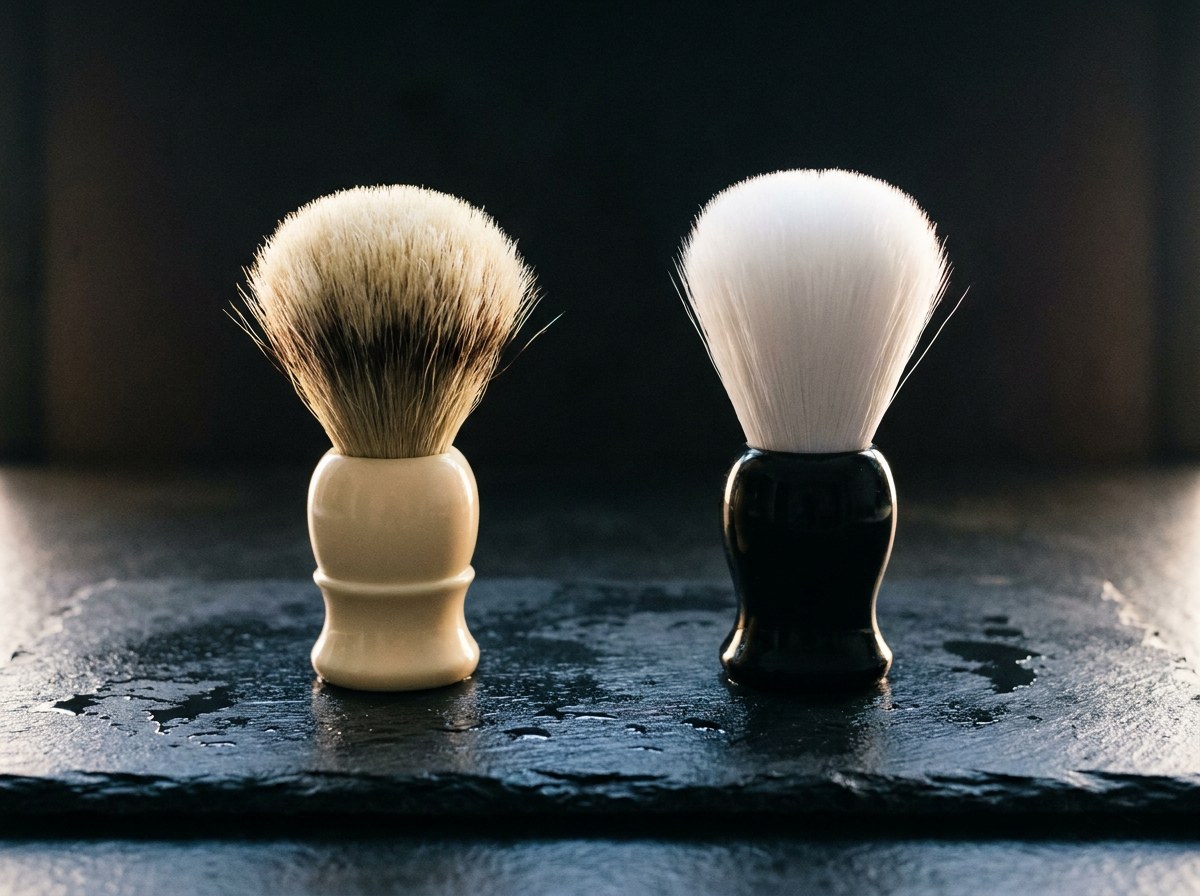
Synthetic brushes dry in 30 to 60 minutes after a thorough shake-out. Badger brushes, because the hair absorbs water internally, can take 4 to 8 hours to fully dry depending on knot density and ambient humidity.
This matters practically if you travel, shave in humid climates, or store your brush in a cabinet. A damp badger knot left enclosed will develop mildew. Synthetics essentially eliminate that risk. For anyone packing a dopp kit, this difference alone often settles the debate.
The drying gap also affects daily shavers in humid bathrooms. Badger knots stored on a stand in open air dry reliably; knots left in a closed medicine cabinet or travel bag do not. Mildew in a badger knot is not easily reversible; it typically means replacing the brush. Community threads on r/wetshaving cite this as the most underappreciated practical disadvantage of badger, particularly for shavers in Florida, Houston, and other high-humidity regions. Synthetics in those same conditions dry in under an hour and store anywhere.
Ethics: Animal Hair vs Vegan
Badger brushes are made from hair sourced predominantly in China. Animal welfare organizations have documented concerns about badger sourcing practices, and this is an active conversation on r/wetshaving. If you are vegan or prefer to avoid animal products, synthetics are the clear choice here.
Not every wet shaver weighs this criterion equally, but the community treats it as a legitimate factor rather than a fringe concern. Synthetics have improved enough that choosing them on ethical grounds no longer means accepting a performance compromise.
The ethics conversation within the hobby has shifted over the past several years. Early synthetic options were noticeably inferior, so the trade-off was real. Current-generation fibers like the AP Shave Co G5C and Yaqi Tuxedo have removed that trade-off. Sharpologist’s coverage of the synthetic category notes that premium synthetic brushes now satisfy the full range of performance criteria that previously required badger. The choice is genuinely values-neutral in terms of performance at current price points.
Break-In Period
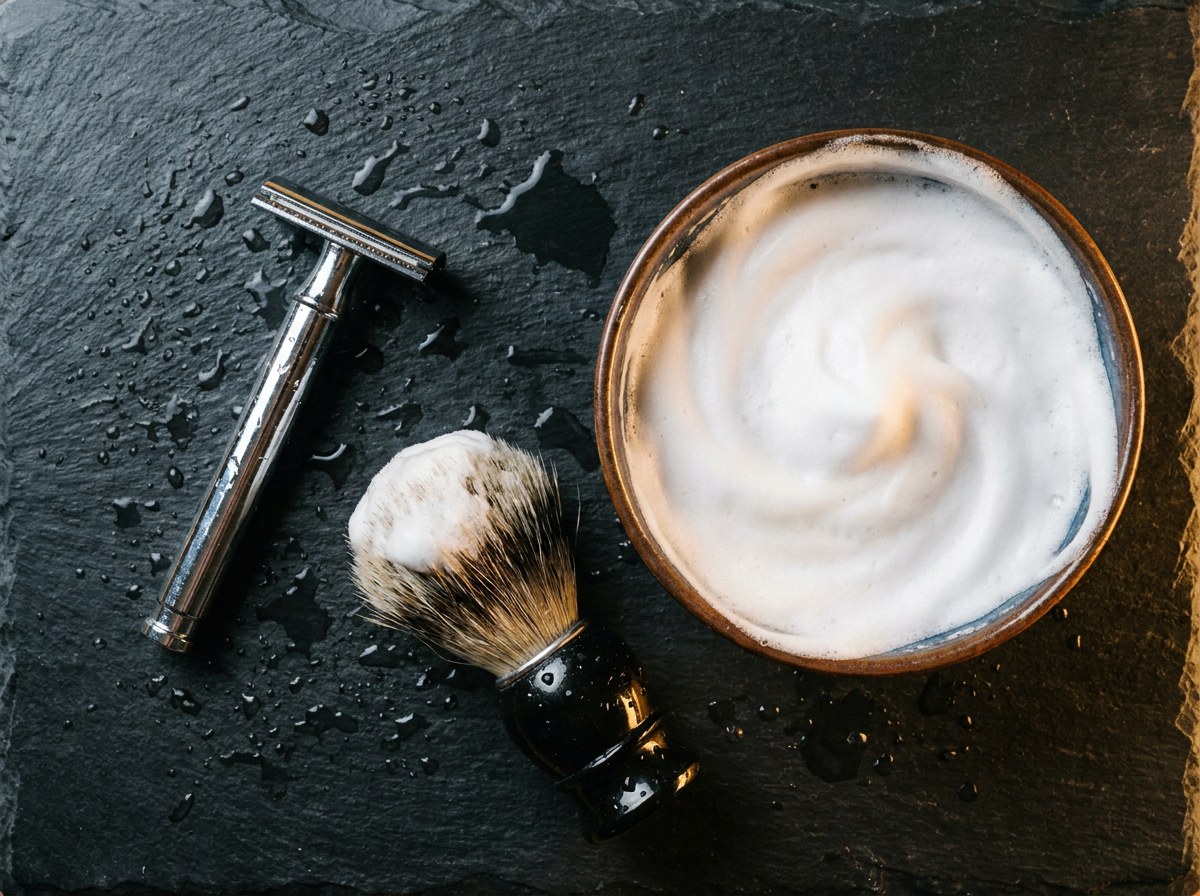
New badger brushes often require 3 to 5 shaves before the tips soften and the knot fully blooms. Some shavers notice a slight stiffness or musty smell in the first few uses. It is a brief process, but it exists.
Synthetics need zero break-in. First lather out of the box performs identically to the hundredth.
The break-in variable matters most if you are buying a brush as a gift or stocking it for occasional use. A badger brush that sits unused for months does not improve; it just waits. Some shavers also find the early-shave stiffness of badger affects their lather-building confidence when they are still learning technique. Synthetics remove that timing variable entirely. Boar brushes (a third option worth noting) have the longest break-in of all: 15 to 30 shaves before the tips split and soften. If you are curious about boar, the Omega boar brush is the community’s most cited entry point, but it requires patience that neither badger nor synthetic demands.
Price and Value
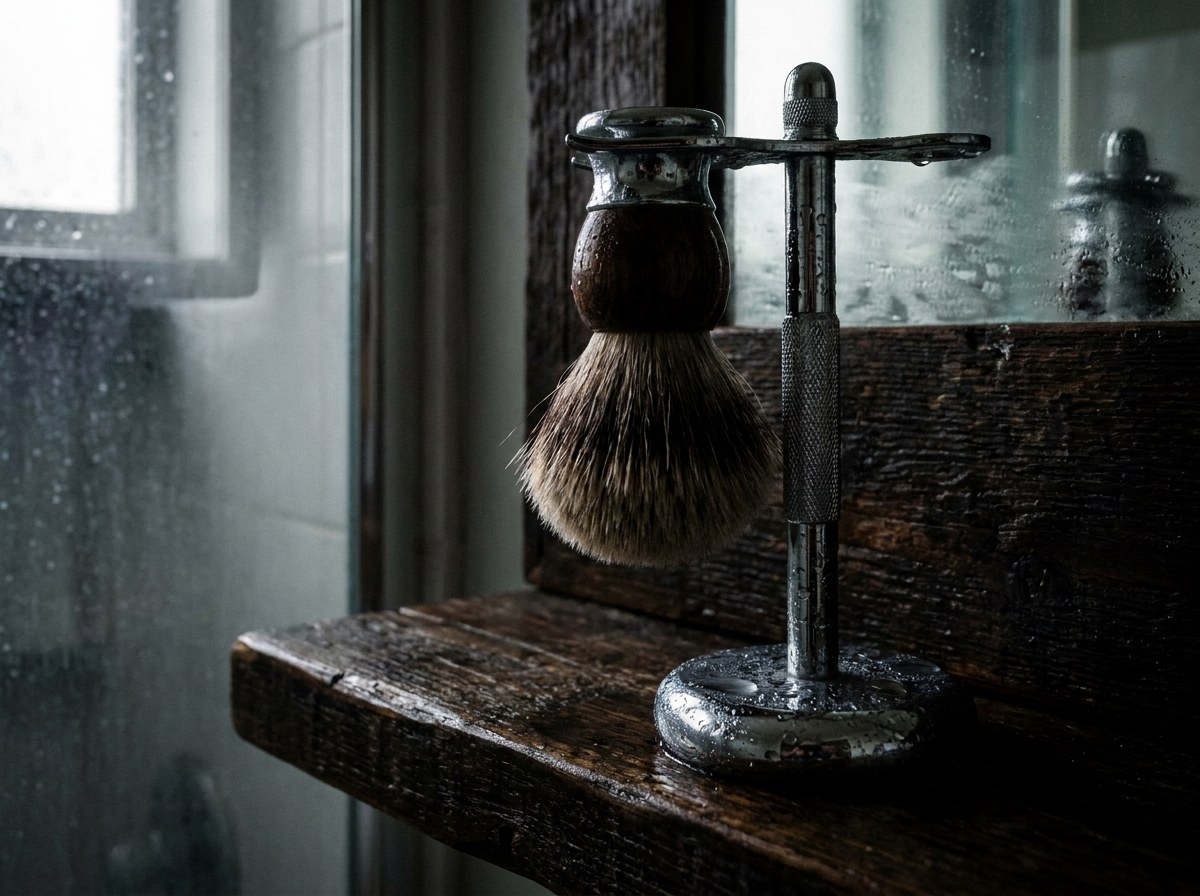
Synthetic brushes start under $15 for usable options and top out around $60 to $80 for premium knots. The Yaqi line offers 24mm and 26mm synthetics in the $15 to $25 range that Sharpologist reviewers consistently rate as overperforming their price. AP Shave Co G5C brushes typically run $35 to $55 depending on handle.
Badger brushes span a much wider range. A Maggard two-band badger starts around $30 to $45 and represents the community’s consensus best-value entry into real quality badger. A Simpson silvertip runs $150 to $300 depending on model and handle material. Above that, artisan handles push prices higher still.
Value math favors synthetics unless you specifically want the silvertip face feel or the aesthetics of a natural-hair brush.
Longevity
Well-maintained badger brushes last 10 to 20 years. The hair is durable if you let it dry properly, store it bristles-down on a stand, and avoid leaving it sitting in water. The handles on quality brushes are essentially indefinite.
Synthetics have a shorter documented track record, partly because the high-quality fiber options are newer. Community reports on Badger & Blade suggest quality synthetics remain in good condition after 5 to 7 years of regular use, with some older knots showing fiber splaying or tip degradation before that. At current prices, replacing a synthetic every several years still costs less than one good silvertip badger.
The longevity gap is real but less decisive than it appears. A $25 Yaqi synthetic replaced every six years costs $75 over 18 years. A Simpson silvertip at $200 that lasts 20 years costs $200 over the same period. The math is closer than the raw longevity numbers suggest, and the synthetic route lets you try different fiber types and knot sizes without committing to an expensive single brush. For most shavers, the lifetime cost difference is not the reason to choose one over the other.
Wet Smell
This is the detail nobody mentions in manufacturer copy. Wet badger hair smells. The community describes it as “wet dog,” musty, or barnyard-adjacent. Most shavers report it diminishes significantly after the first 10 to 15 shaves, but a faint trace can persist in lower-grade badger indefinitely.
Synthetics smell like nothing when wet. Zero odor, first use through last use.
For shavers who are odor-sensitive, or who share a bathroom and do not want to explain themselves, this is a real tiebreaker. The smell is not harmful and most shavers habituate to it quickly, but it does affect the sensory experience of the morning routine. If your shave ritual is partly about atmosphere and calm, a musty wet-hair smell in the first 10 shaves works against that. Community threads on r/wetshaving frequently see new shavers alarmed by the smell before being reassured it fades; it is one of the most common first-week questions the sub receives.
Which Brush Should You Buy
The answer depends entirely on what you actually value, so here is the community’s verdict by use case.
- Beginner: Buy a synthetic first. You will spend under $25, skip the break-in, and learn lather building without variables. A Yaqi 26mm synthetic is the standard recommendation on r/wetshaving starter threads.
- Traveler: Synthetic without question. Fast drying, no odor risk in a bag, and low replacement cost if TSA confiscates your kit bag.
- Sensitive skin: A high-quality synthetic like the AP Shave Co G5C or a genuine silvertip badger. Both are soft enough; coarser badger grades can irritate.
- Luxury face feel: A Simpson silvertip or a Maggard two-band if you want the real thing at a saner price. Nothing else replicates that feel reliably.
- Ethical or vegan: Any quality synthetic. This is not a compromise anymore.
- Budget under $20: Yaqi synthetic. There is no badger worth buying in this range.
Most shavers who stick with the hobby for more than a year end up with at least one of each. See the full best shave brush guide if you want rated picks across both categories with current pricing.
Disclosure: This page contains affiliate links. If you buy through our links, we may earn a commission at no extra cost to you. Prices and availability reflect community-reported street pricing as of the time of writing; verify current pricing before purchasing.
Check price on Amazonsynthetic, 24mm
Check price on Amazonsilvertip badger
Frequently Asked Questions
Is a synthetic shaving brush as good as badger?
For most shavers, yes. Modern synthetics produce excellent lather, dry faster, require no break-in, and have no odor. The main area where a quality badger brush still leads is face feel, specifically silvertip grade, which has a softness that current synthetic fibers approximate but have not fully matched.
What is the difference between synthetic and badger shaving brush performance in lather?
Badger hair absorbs water internally and releases it gradually, which helps build dense lather during longer loading sessions. Synthetic fibers hold water between strands and release it faster. Both produce high-quality lather; the technique adjusts slightly by hair type, but neither has a meaningful performance advantage for most shavers.
Do badger shaving brushes smell bad?
New badger brushes often have a noticeable “wet dog” or musty smell. The r/wetshaving community reports this usually fades after 10 to 15 shaves. Lower-grade badger may retain a mild odor longer. Synthetic brushes have no wet smell at any point in their life.
Which shaving brush lasts longer, synthetic or badger?
Quality badger brushes last 10 to 20 years with proper care: drying bristles-down, avoiding prolonged soaking, storing in open air. High-quality synthetics show good condition after 5 to 7 years based on community reports, though the category is newer. A well-maintained badger brush likely outlasts a synthetic at equivalent price points.