Mild vs Aggressive Razors: What’s the Difference?
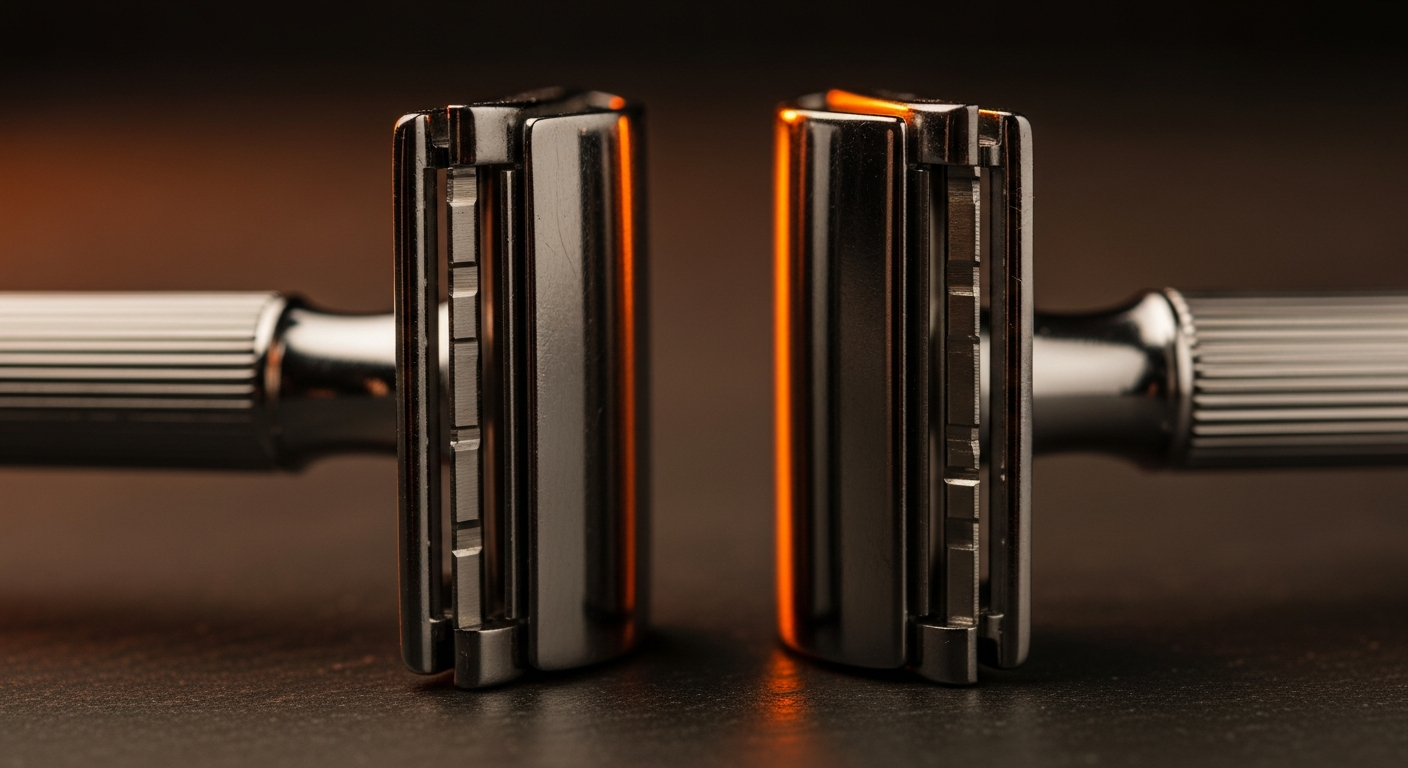
Razor aggressiveness comes down to two things: how much blade is exposed above the razor’s baseplate, and the size of the blade gap. A mild razor keeps the blade tucked close, so each pass shaves conservatively and forgives technique errors. An aggressive razor exposes more blade, cuts more hair per stroke, and gets the job done faster. It also punishes poor angle or pressure with nicks and irritation.
That’s the short answer. The longer one depends on your beard density, skin type, and how much time you’ve spent holding a single-edge blade against your face. Razor models and prices below are current as of mid-2026; prices reflect US street pricing and may vary by region.
Some links in this guide are affiliate links. If you buy through them, we earn a small commission at no extra cost to you. Our recommendations are based on community consensus and manufacturer specifications, not commercial relationships.
Shavory earns a commission on qualifying purchases through the Amazon links on this page, at no extra cost to you. Picks are chosen on performance and value, not on commission.
What Blade Gap and Blade Exposure Actually Mean
Blade gap is the measured distance between the blade’s edge and the safety bar directly below it. Manufacturers publish this in millimeters. The Muhle R41, one of the most aggressive razors on the market, sits at 1.08 mm per Muhle’s published spec sheet. The Edwin Jagger DE89 measures 0.67 mm. That fraction of a millimeter accounts for an enormous difference in how the razor feels on skin.
Blade exposure is related but distinct. It describes whether the blade edge sits above, level with, or below the shaving plane formed by the razor’s cap and guard. Positive exposure means the edge protrudes past that plane and contacts skin more directly. Negative exposure tucks the blade slightly behind it, adding a layer of protection. Most mild razors run neutral to slightly negative. Most aggressive razors run positive.
Community consensus on r/wetshaving and Badger & Blade consistently confirms this: blade gap and exposure together determine aggressiveness, not either measurement alone. A razor with a wide gap but negative exposure can still shave gently. A narrow-gap razor with positive exposure can bite harder than its numbers suggest.
| Razor | Where it sits | Why |
|---|---|---|
| Henson AL13 Mild | Very mild | Very low exposure; over-pressure barely registers |
| Edwin Jagger DE89 | Mild | Small gap, closed comb, the standard beginner geometry |
| Merkur 34C | Mild, heavy | Same mild geometry, more mass doing the work |
| Rockwell 6S | Mild to aggressive | Six plates, so you move along the scale deliberately |
| Merkur 25C | More aggressive | Open comb, moves more lather and hair per pass |
| Merkur Futur 700 | Adjustable, reaches aggressive | Dial climbs well past most fixed razors |
Efficiency vs. Forgiveness
An aggressive razor removes more stubble per stroke. That efficiency is real. Dense, coarse beards that would need four passes with a mild razor may be done in two. For experienced shavers with tough growth, this translates directly into less time and less skin irritation from repeated passes.
The trade-off is forgiveness. An aggressive razor amplifies every mistake: too much pressure, a shallow angle, a moment of distraction. Mild razors compress that margin for error. You can get away with slightly imprecise technique and still come away with clean skin.
Sharpologist, a wet-shaving resource that has published razor guides since 2011, notes that the single most common beginner error is pressing down instead of letting the razor glide. A mild razor forgives that error. An aggressive one doesn’t. If you’re still building the habit of zero pressure, pick mild regardless of your beard type.
That calculus flips once your technique is locked in. Experienced shavers with heavy growth often find mild razors frustrating because they’re making extra passes to compensate for efficiency the razor just doesn’t have. A recurring pattern in r/wetshaving upgrade threads shows shavers with 12+ months of experience and coarse growth overwhelmingly move toward mid-to-aggressive razors, while beginners who start aggressive and switch to mild report noticeably smoother early shaves.
Pass Count and Skin Comfort
With a mild razor, most shavers need three passes to reach a close result: with the grain, across the grain, and against the grain. With an aggressive razor, two passes often get there. That sounds like a win for aggressive, but the math on skin comfort doesn’t always work out that way.
If your skin runs sensitive or reactive, fewer passes with a harsher razor can still leave you more irritated than three passes with a gentle one. The friction and blade-skin contact angle differ enough that community reports on r/wetshaving frequently describe sensitive-skinned shavers doing better with mild razors even after years of practice.
The practical threshold most experienced shavers land on: if you’re regularly finishing a two-pass shave with zero irritation, stepping up to a more aggressive razor is a real upgrade. If you’re still troubleshooting irritation after each shave, fix technique first. A more aggressive razor won’t solve a technique problem; it will make it worse.
Which Razor Suits Your Beard and Skin
Dense, coarse beards tend to respond better to a more efficient razor. More aggressive geometry chews through heavy growth without requiring repeated strokes in the same area, and repeated strokes in the same area are themselves a cause of irritation. This applies equally if you shave every day or stretch the interval to three or four days.
Fine or sparse beards don’t need that efficiency. A mild razor handles them cleanly without any risk of over-cutting. Pushing to a more aggressive option for thin growth mostly adds risk with no payoff.
Sensitive skin almost always benefits from a mild or mid-aggressive razor regardless of beard density. The reduced blade exposure means less direct contact between the edge and skin on each stroke.
If you’re new to safety razors, the best safety razor for beginners is almost always on the mild end. Learning correct angle (typically 30 degrees) and zero-pressure technique is harder to do safely when the razor is also aggressive.
Mild Razor Recommendations
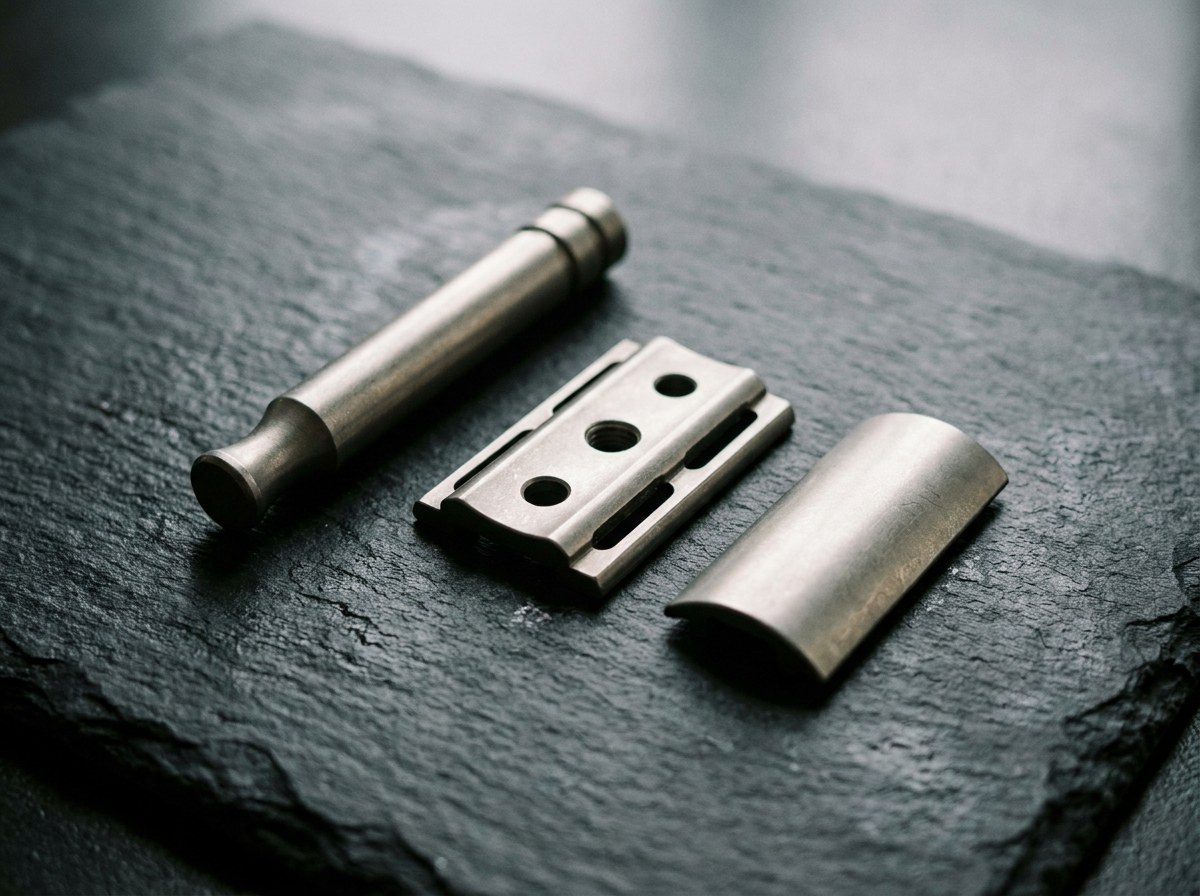
The Edwin Jagger DE89 is the most frequently recommended mild razor across Badger & Blade threads and beginner guides. It’s consistent, widely available, and forgiving enough that technique mistakes don’t draw blood. Street price runs $35-$45.
The Merkur 34C (Heavy Duty) runs similarly mild with added handle weight, which helps newer shavers learn to let gravity and razor weight do the work rather than pressing. Both the DE89 and the 34C sit in the $35-$50 range and represent the safest first purchase in the category.
The Henson Mild takes the mild concept further with precision-machined blade alignment that produces exceptionally consistent geometry shave to shave. It runs higher, around $75-$90, but earns consistent praise for skin comfort on r/wetshaving weekly threads. It’s the choice if you want the smoothest possible introduction with zero mechanical variance.
For a full breakdown of top-rated options across categories, see the best safety razor guide.
Aggressive Razor Recommendations
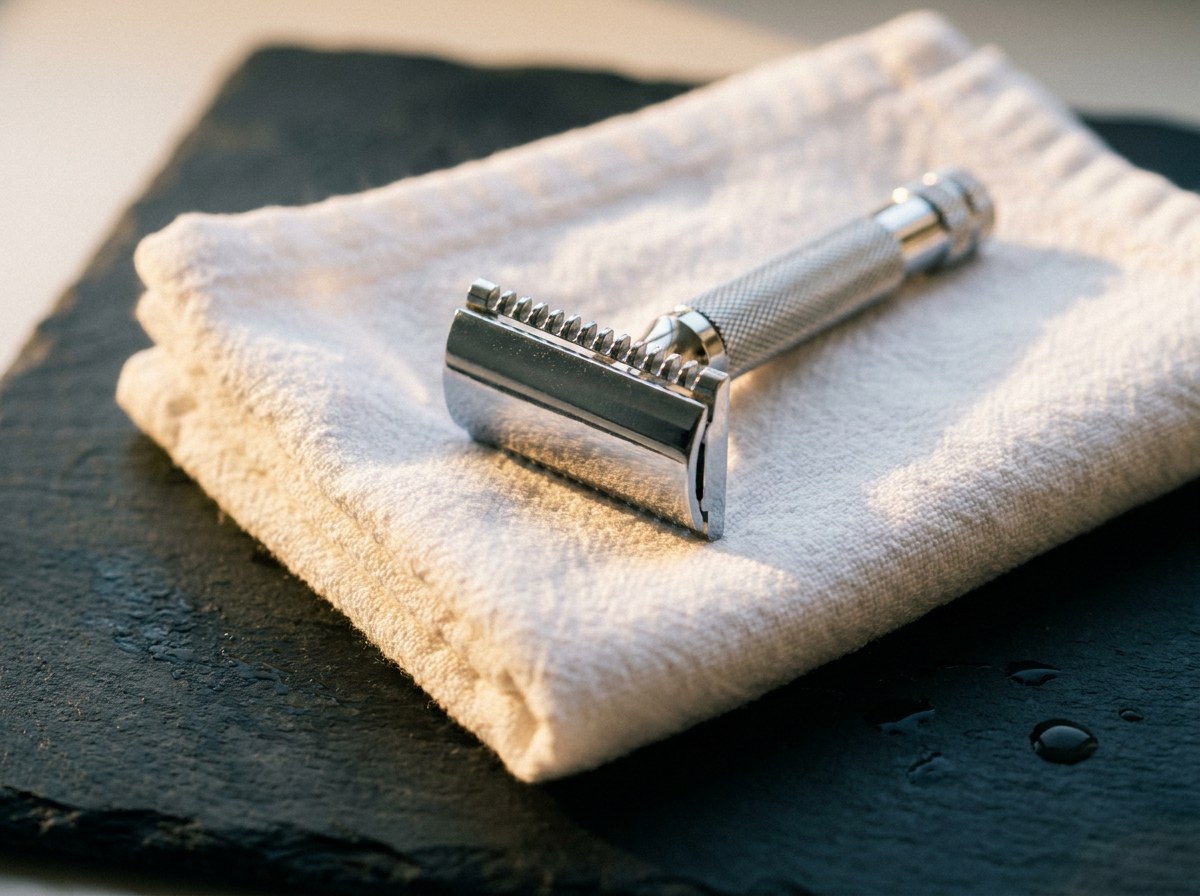
The Muhle R41 is the benchmark aggressive razor in most wet-shaving communities. Its blade gap of 1.08 mm gives it a well-documented reputation for efficiency bordering on demanding. Experienced shavers who’ve dialed in their technique consistently rate it among the most effective razors available. Shavers who haven’t often regret picking it up first.
The Blackland Blackbird (stainless steel, $125-$145) occupies a different tier. It’s efficient but more controlled than the R41. Community reviews on r/wetshaving describe it as aggressive in output but not in feel, meaning it cuts well without the nervous energy of an openly wide-gap razor. It suits experienced shavers who want performance without the unforgiving character of the R41.
The Karve Christopher Bradley uses a plate system where the C plate and above move into mid-to-aggressive territory. Swapping plates lets you tune aggressiveness to the day’s growth or the season’s skin condition, which makes it a practical choice for shavers who understand the spectrum but want one razor body.
Adjustable Razors: The Middle Path
If you’re uncertain where you fall on the mild-to-aggressive spectrum, an adjustable razor removes the guesswork. These razors let you change the blade gap while keeping everything else constant.
The Rockwell 6S uses a plate-swapping system, six plates numbered 1-6 by aggressiveness, rather than a dial. It’s well-regarded for build quality and consistency. The Rockwell 6S review covers its plate geometry in detail if you want the full breakdown.
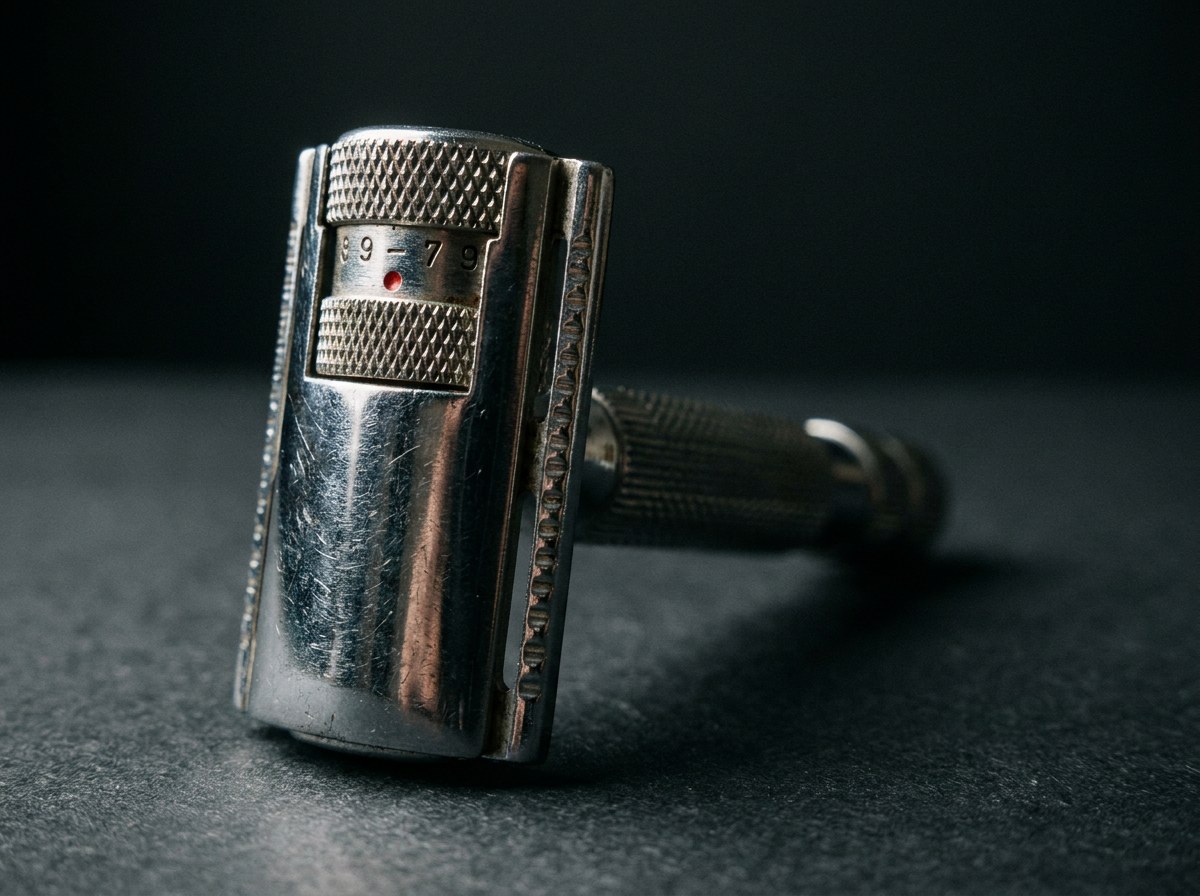
The Merkur Progress uses a dial mechanism running from 1 (mild) to 5 (aggressive) and has been a community standard for decades. It’s not the most precise engineering, but it’s reliable and widely available under $60.
The Parker Variant offers similar dial adjustability at a lower price point, around $40-$50, and is frequently recommended as an entry point into adjustables before committing to pricier hardware.
Adjustables work well for shavers with variable-length growth across the week, or for anyone who wants to learn how to use a safety razor with flexibility built into the tool.
How to Choose Between Mild and Aggressive
The decision comes down to three variables: your beard type, your skin sensitivity, and your technique maturity. Call it the beard-skin-technique check. If you have dense, coarse growth and have been shaving with a safety razor long enough to hold a consistent 30-degree angle without pressing, a more aggressive razor genuinely serves you better. Fewer passes mean less cumulative friction, and less friction on coarse skin is a real skin-comfort win. If any one of those three conditions isn’t met (thin beard, reactive skin, or technique still in progress), a mild razor will outperform an aggressive one for you specifically, regardless of what the community consensus recommends for heavy-bearded shavers. The most common mistake in razor selection is copying someone else’s aggressive razor recommendation without accounting for your own variables. Start with what matches your current situation. Technique improves faster on a forgiving razor, and once it’s locked in, stepping up to a more aggressive option is a single plate swap away.
Quick Reference: Mild vs Aggressive
| Mild | Aggressive | |
|---|---|---|
| Blade gap | ~0.5-0.75 mm | ~0.9-1.1 mm+ |
| Passes needed | 3 | 2 |
| Best for | Beginners, sensitive skin, fine beards | Experienced shavers, coarse/dense beards |
| Forgiveness | High | Low |
| Example razors | DE89, Merkur 34C, Henson Mild | Muhle R41, Blackbird, Karve C+ |
Frequently Asked Questions
What does razor aggressiveness mean?
Razor aggressiveness describes how much blade the razor exposes to skin during a shave. Two measurements drive it: blade gap (distance between blade edge and safety bar) and blade exposure (whether the blade sits above or below the shaving plane). Higher values on both mean more hair removed per pass and less margin for technique errors.
Is an aggressive razor better for thick beards?
Often, yes. Dense, coarse beards can require multiple passes with a mild razor to achieve the same result an aggressive razor delivers in two. The efficiency advantage is real for heavy growth. Skin sensitivity still matters though, and an aggressive razor on reactive skin can cause irritation regardless of beard density.
What blade gap is considered mild vs aggressive?
Most wet-shaving communities treat anything under 0.75 mm as mild to moderate and anything above 0.9 mm as aggressive. The Edwin Jagger DE89 measures 0.67 mm; the Muhle R41 sits at 1.08 mm. Blade exposure matters just as much, but blade gap is the most commonly cited spec when comparing razors.
Should beginners start with a mild or aggressive razor?
Start mild. Correct angle, zero pressure, and short strokes are harder to learn when an aggressive razor punishes every deviation immediately. A mild razor like the Edwin Jagger DE89 or Merkur 34C gives you room to build those habits without drawing blood on the learning curve.